The drawer everybody has
There is one in every house, every classroom and every workshop. It contains beads, screws, clips, hair ties, a battery of unknown charge, four keys, and eleven things whose purpose was obvious when they went in. Nothing in it is lost, exactly. It is all right there, in a heap, which is functionally the same thing.
The drawer is not a failure of tidiness. It is what happens when small things arrive faster than decisions about where they live. We make a lot of small things: 954 of 1159 lines state a pack count, and plenty of those counts run into the hundreds. Buying by the pack is cheaper per piece and it moves the problem downstream, into the question of where four hundred of something goes.
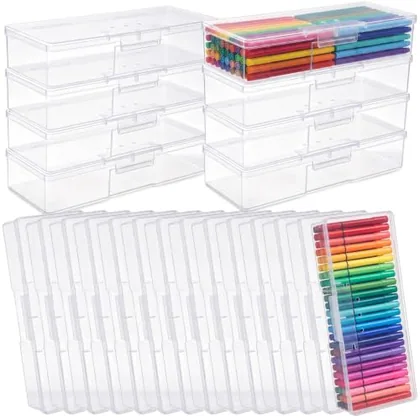
This guide is about that question. It is deliberately practical, and it ends with the two places where sorting small parts stops being about tidiness and starts being about somebody's hands, or a small child's airway.
Sort by how often you reach for it, not by what it is
The instinct is to sort by category: screws with screws, beads with beads. It produces a beautiful system that nobody maintains, because putting a thing away costs more effort than dropping it, and the category is only obvious to the person who invented it.
The sort that survives is by frequency. Three tiers, and only three.
Daily. Out on the surface, in an open container, no lid. If it needs a lid it will not go back.
Weekly. In a divided box with a clear lid, at eye level. Clear matters more than labelled: a label tells you what you wrote, a window tells you what is there.
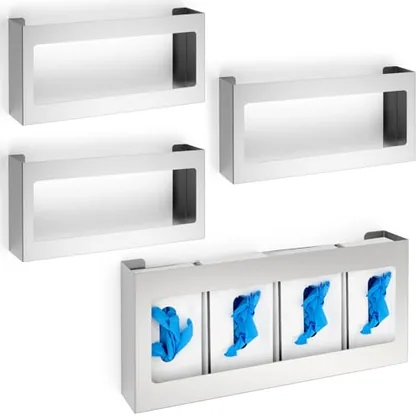
Rarely. Sealed, labelled with a count and a date, and stored anywhere at all. This is the tier where a resealable bag inside a larger box beats a beautiful compartment.
The reason this works is that it puts the effort where the traffic is. The daily tier costs nothing to maintain because there is no barrier. The rare tier costs nothing because it is opened twice a year.
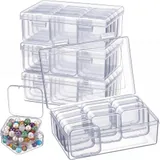
52 Piece Bead Organizer Box, Clear
A divided box with a clear lid is the weekly tier: you can see the contents without opening it, which is what keeps a system alive.
$16.99 $0.33 eachMatching containers beat better containers
A shelf of mismatched boxes wastes about a third of its own volume, because containers of different heights cannot stack and containers of different footprints cannot tile. This is why storage is one of the categories where buying a pack is not merely cheaper but structurally better: identical boxes stack, tile, and can be relabelled and swapped without rethinking the shelf.
What we make for this, counted rather than described:
| Line | Stated count | Price | Per piece |
|---|---|---|---|
| 248 Piece 1 Inch Wood Alphabet Letters Numbers Blank Unfinished | 248 | $12.99 | $0.06 |
| 248 Piece 1 Inch Wood Alphabet Letters Numbers Blank Unfinished, Multicolour | 248 | $14.99 | $0.07 |
| 200 Piece Closet Rack Dividers Rectangular, White | 200 | $36.95 | $0.19 |
| 100 Piece Adhesive Cable Wire Clips, Clear | 100 | $8.99 | $0.09 |
| 100 Piece Round Eyelash Tray Holder Plastic Eye Lash Trays Lid, Clear | 100 | $9.99 | $0.10 |
| 100 Piece Rectangle Lash Trays Holder Plastic Eyelash Trays, Clear | 100 | $9.99 | $0.10 |
| 100 Piece Rectangle Lash Trays Holder Plastic Eyelash Trays, Pink | 100 | $11.99 | $0.12 |
| 100 Piece Closet Rack Dividers Rectangular, White | 100 | $24.95 | $0.25 |
Per-piece figures are rounded up to the cent. Where a line states no count, it does not appear in this table rather than appearing with a guess.
The one exception to matching is the container that has to be a particular shape because its contents are: a long thin box for long thin things. Everything else benefits from being interchangeable.
Label the count, not just the contents
"Screws" is a label that tells you nothing you could not see through the lid. "M4 x 20, 63 left, opened March" is a label that lets you order without opening the box, and lets somebody else order without asking you.
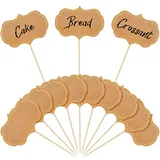
100 Piece Cheese Marker Toothpick Label, Brown
Labels and markers are the cheapest part of a storage system and the part that makes it portable.
$14.99 $0.15 eachThree fields cover almost everything: what it is, how many are left, and when the count was taken. The count goes stale, and that is fine; a stale count with a date on it is still better than no count, because you know how much to distrust it.
The product pages follow the same habit. A page states the count that is on the packaging, and a number with a known provenance is worth more than a number that looks tidy.
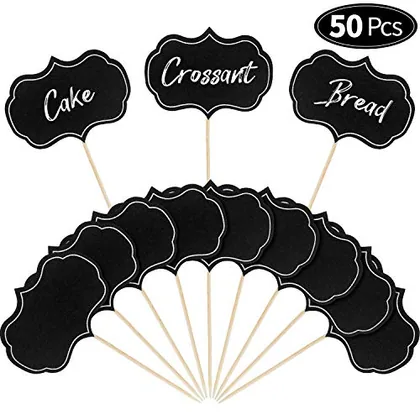
The School & Office shelf carries the labels, markers and tags for this, in counts that suit a room rather than a desk.
Craft supplies are raw material, and they behave differently
The Craft & Modelling shelf is 76 lines of beads, blanks, wire, findings, moulds and glitter. It breaks the frequency rule in an interesting way. Craft materials do not go at a steady rate, they go in bursts, in whatever colour the current project needs.
Two adjustments make the difference. Sort craft supplies by colour rather than by type, because a project is chosen by colour and worked in one sitting. And keep the project's materials together while it is live, in one shallow tray, rather than returning each part to its home between sessions.
Glitter and fine powders deserve one specific warning that has nothing to do with tidiness: they travel. A sealed container inside a second container is not paranoia, it is the difference between a craft box and a craft room.
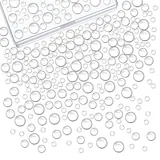
700 Piece Dewdrop Water Droplet, Clear
Beads and small findings are bought by the hundred and used by the handful, which is exactly the case for a sealed, counted container.
$6.99 under 1¢ eachThe hands doing the sorting
Sorting hundreds of small parts is repetitive work with the fingertips, and it is worth knowing where the wear shows up. Pressure and friction on skin produce the same result on a hand as they do on a foot.
Corns and calluses are caused by pressure or friction on your skin. They often appear on feet where the bony parts of your feet rub against your shoes.
MedlinePlus, U.S. National Library of Medicine
That is the mechanism, stated plainly by a national medical library, and the second half of it is the part people forget: it is not only feet.
Corns usually appear on the tops or sides of toes while calluses form on the soles of feet. Calluses also can appear on hands or other areas that are rubbed or pressed.
MedlinePlus, U.S. National Library of Medicine
For anybody who does this work in volume, the practical answers are unglamorous. Take the pressure off the pad of the finger by using a tool rather than a fingernail. Change grip regularly. Stop before the hot spot becomes a blister, because a blister costs a day and a callus costs a season of comfort.
Wearing shoes that fit better or using non-medicated pads may help. While bathing, gently rub the corn or callus with a washcloth or pumice stone to help reduce the size.
MedlinePlus, U.S. National Library of Medicine
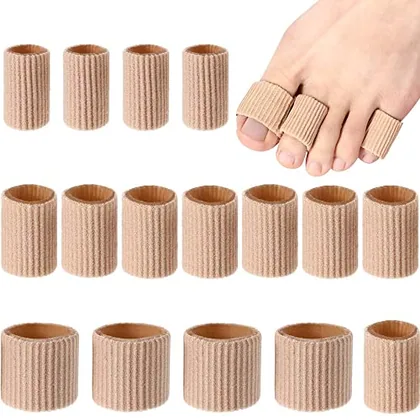
The Foot Care & First Aid shelf carries the small protections for exactly this: sleeves, pads and cots that sit between skin and the thing rubbing it. What none of them are is a treatment.
To avoid infection, do not try to shave off the corn or callus. See your doctor, especially if you have diabetes or circulation problems.
MedlinePlus, U.S. National Library of Medicine
None of this is medical advice. It is published guidance from a national medical library, quoted so you can follow it back to the source. Every source is listed with its read date on the sources page.
Small parts and small children in the same room
The second place where sorting stops being tidiness is a house with a child under three in it. A container of four hundred beads is a container of four hundred choking hazards, and the fact that it is neatly stored does not change that if the lid is the kind a toddler can work.
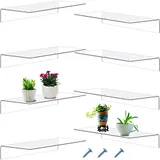
8 Piece Acrylic Shelves 14 x 5 x 2 Inches Clear
Small parts belong above shoulder height in a house with a toddler, whatever the drawer would prefer.
$32.99 $4.13 eachThree rules cover it. Anything that fits inside a cardboard tube from a roll of paper is small enough to be a hazard for a child under three. Storage for those things belongs above adult shoulder height rather than in a low drawer, however convenient the drawer is. And a project in progress on a low table is the least safe arrangement in the house, because it is open, at eye level and interesting.
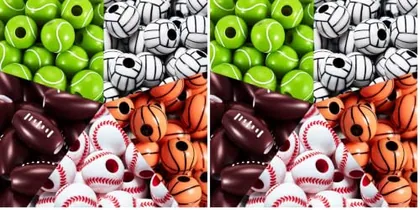
A stated count earns its keep here too: it tells you whether everything went back in the box.
The bag against the box
Two containers cover almost all small parts, and choosing between them is not a matter of taste.
The resealable bag wins on volume, on cost per item stored, and on the ability to squeeze into a space that is not a box shape. It loses on stacking, on standing up, and on surviving being opened four hundred times.
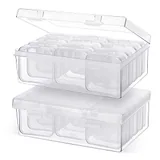
24 Piece Bead Organizer Plastic Small Bead Storage Box Clear
A divided box shows everything at once. Bags inside it hold the overflow.
$8.45 $0.36 eachThe rigid divided box wins on retrieval: you open one lid and see everything. It loses on flexibility, because a compartment is a decision made once, at the factory, about what size things should be.
The arrangement that works in practice is both, nested. Bags inside a box, one bag per category, the box labelled with what is in it. The bag does the containing, the box does the stacking, and neither is asked to do the other job.
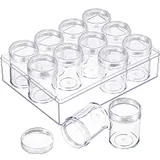
12 Piece Bead Organizer Small Bead Storage Containers Set Plastic, Clear
Small lidded pots inside a bigger box keep apart the parts that must never mix.
$14.38 $1.20 eachOne caution worth stating: a bag is not a barrier. Anything that must not be reached by a child is stored by height and by lid, not by being inside a bag inside a box.
Ten minutes a week beats a spring clean
Sorting sessions fail for the same reason diets do: they are events rather than habits, and the system reverts between them.
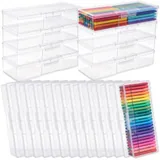
24 Piece Plastic Pencil Box Bulk Clear Pencil Case
A clear box is half a label already: you see what is inside without opening it.
$36.99 $1.55 eachThe version that survives is unglamorous. Once a week, ten minutes, one rule: everything that is out goes back or goes away. No re-labelling, no re-thinking the system, no starting again with better boxes. The only decision allowed is "keep" or "bin".
Two things make it possible. The daily tier has to be open, because a lid is a barrier and ten minutes is not long enough to fight barriers. And the rarely tier has to be sealed, because a session that opens the archive turns into an afternoon.
A system that takes ten minutes a week takes about eight hours a year, which is roughly the length of the single miserable Saturday it replaces.
Moving a system to a new room
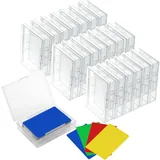
36 Piece Plastic Deck Boxe, Clear
Clear boxes that stack are what lets a system move rooms without being rebuilt.
$26.98 $0.75 eachThe hardest thing about a working system is that it is invisible: it lives partly in the containers and partly in the head of whoever built it. Move it to a new room, or hand it to somebody else, and half of it evaporates.
Three habits make a system portable. Label the outside of a container with its contents and its count, so nothing has to be opened to be understood. Keep the tiers physically apart, so it is obvious at a glance which shelf is daily and which is archive. And write one line, somewhere near the shelf, saying what the system is: "sorted by how often, not by what". That sentence is the whole handover.

20 Piece Yarn Bobbins
Bobbins keep thread wound and counted between one class and the next.
$8.99 $0.45 eachFor a classroom or a shared workshop, this is the difference between a cupboard everyone uses and a cupboard one person maintains for everyone else. The School & Office shelf carries the labels and markers, and the Storage & Organising shelf carries the matching containers that make the tiers legible from the door.
What each card tells you
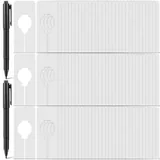
200 Piece Closet Rack Dividers Rectangular, White
Counts on the pack are what make the weekly ten minutes possible: you know what a full box looks like.
$36.95 $0.19 eachEvery card prints the stated count, the stated size where one is given, the colour and the material, in the words of the line's own description.
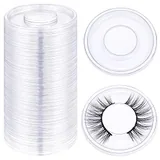
100 Piece Round Eyelash Tray Holder Plastic Eye Lash Trays Lid, Clear
A counted container is the cheapest way to know whether everything went back in the box.
$9.99 $0.10 eachThe stars on a product are the figures published for that product, counted once for a whole family of colours and sizes rather than once for each of them. Test results and certifications belong to whoever issues them, and any warranty is the one given where you order.
Prices carry the date of the last update, stated once on the editorial policy page rather than repeated on every screen. Ordering, payment, delivery and returns happen at checkout, wherever you place the order.
Read next
If the small parts in question are going on a wall, read fixing things to a wall without guessing. If they are going on a table for thirty people, read a party for thirty, counted backwards.
Or start from the shelves: storage and organising, craft and modelling, foot care and first aid.